Short Demonstration
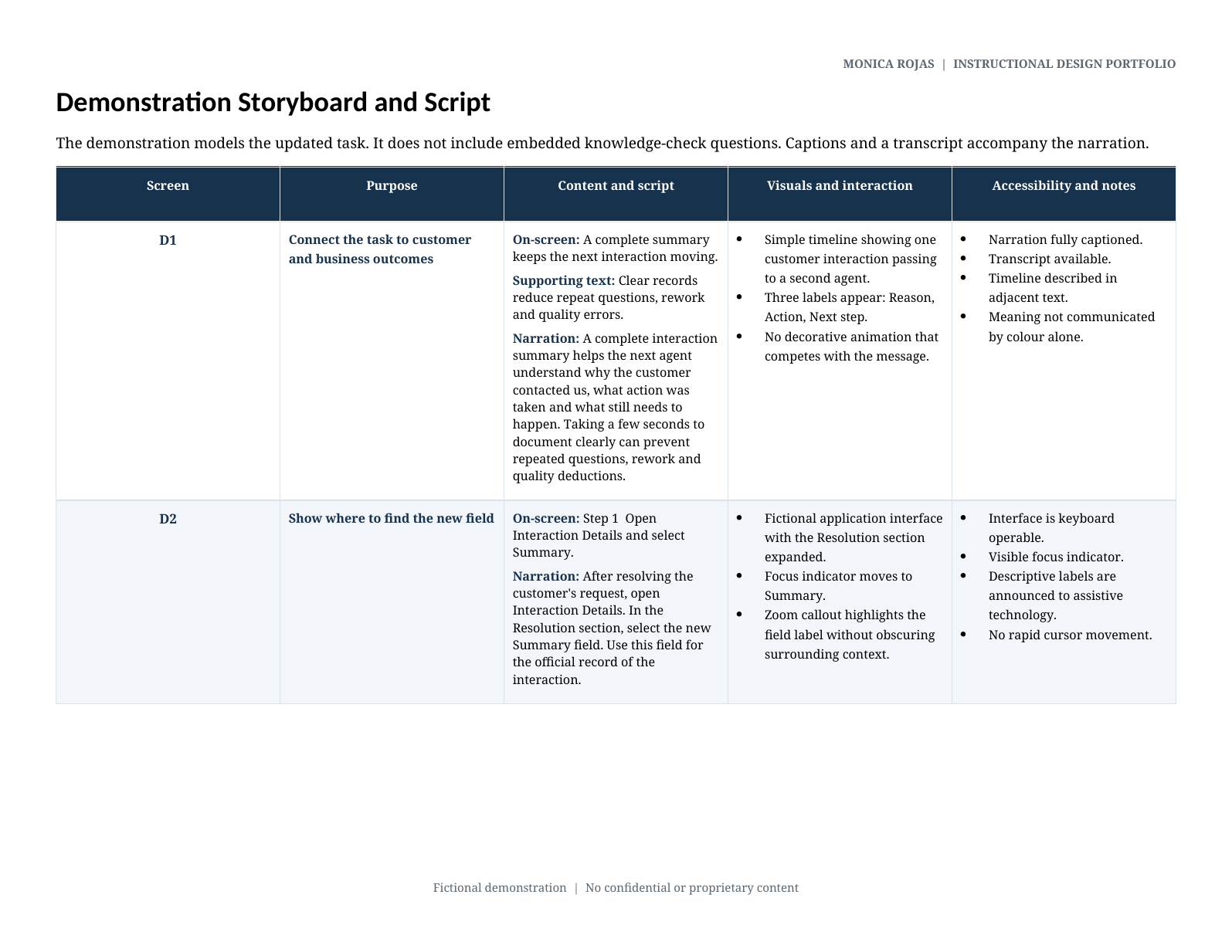
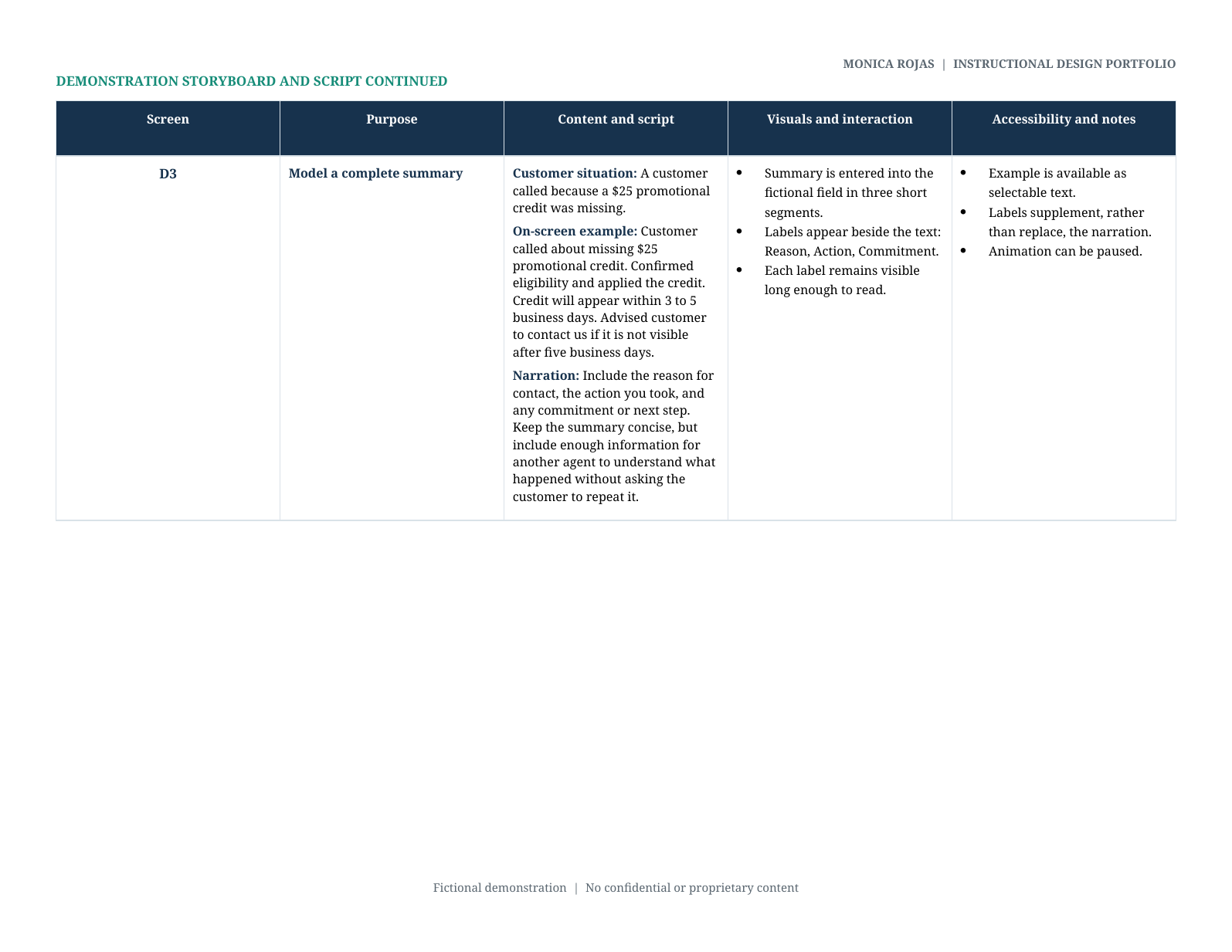
Shows where to find the field and models a complete, accurate entry.
Instructional design sample
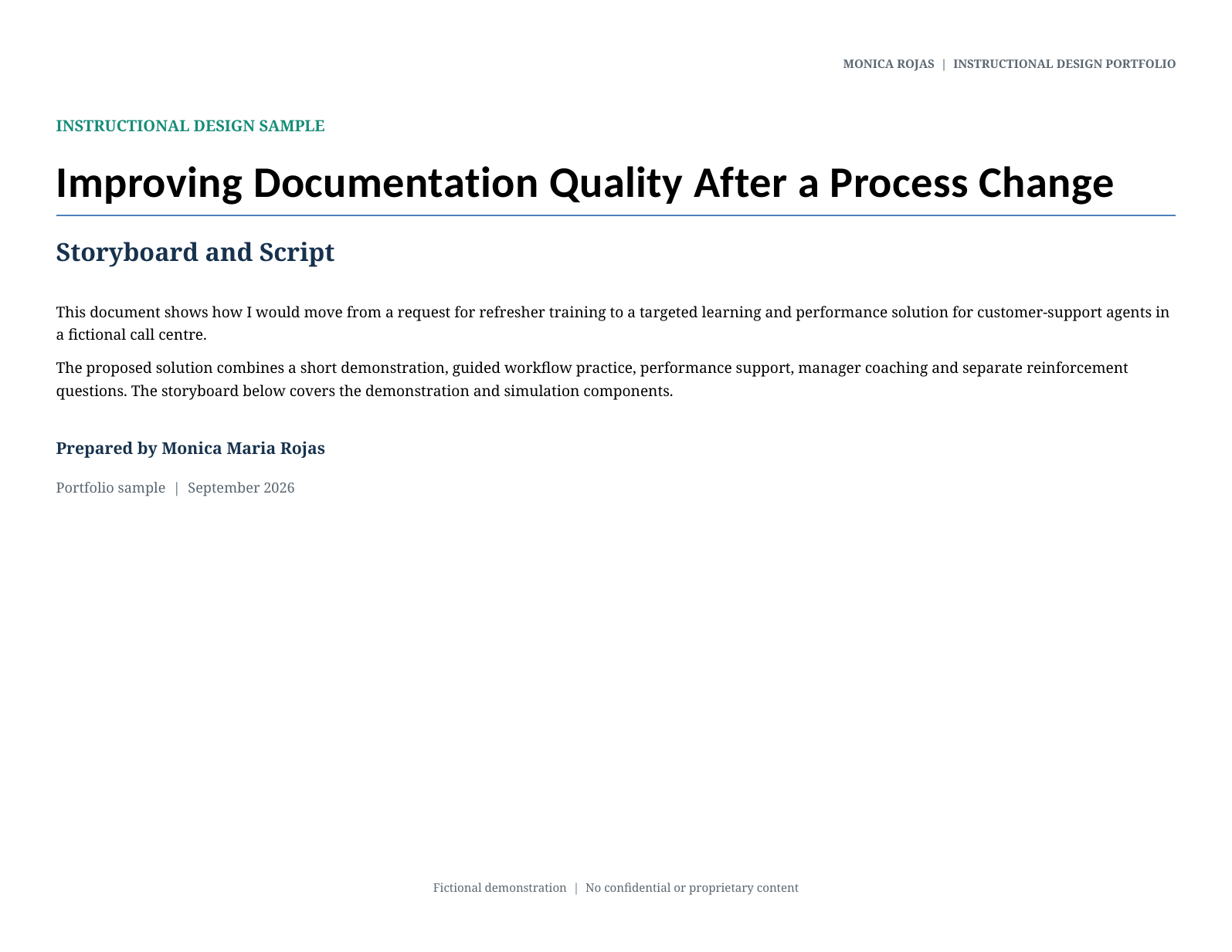
A fictional call-centre scenario showing how I would move from an initial request for refresher training to a focused learning and performance solution.
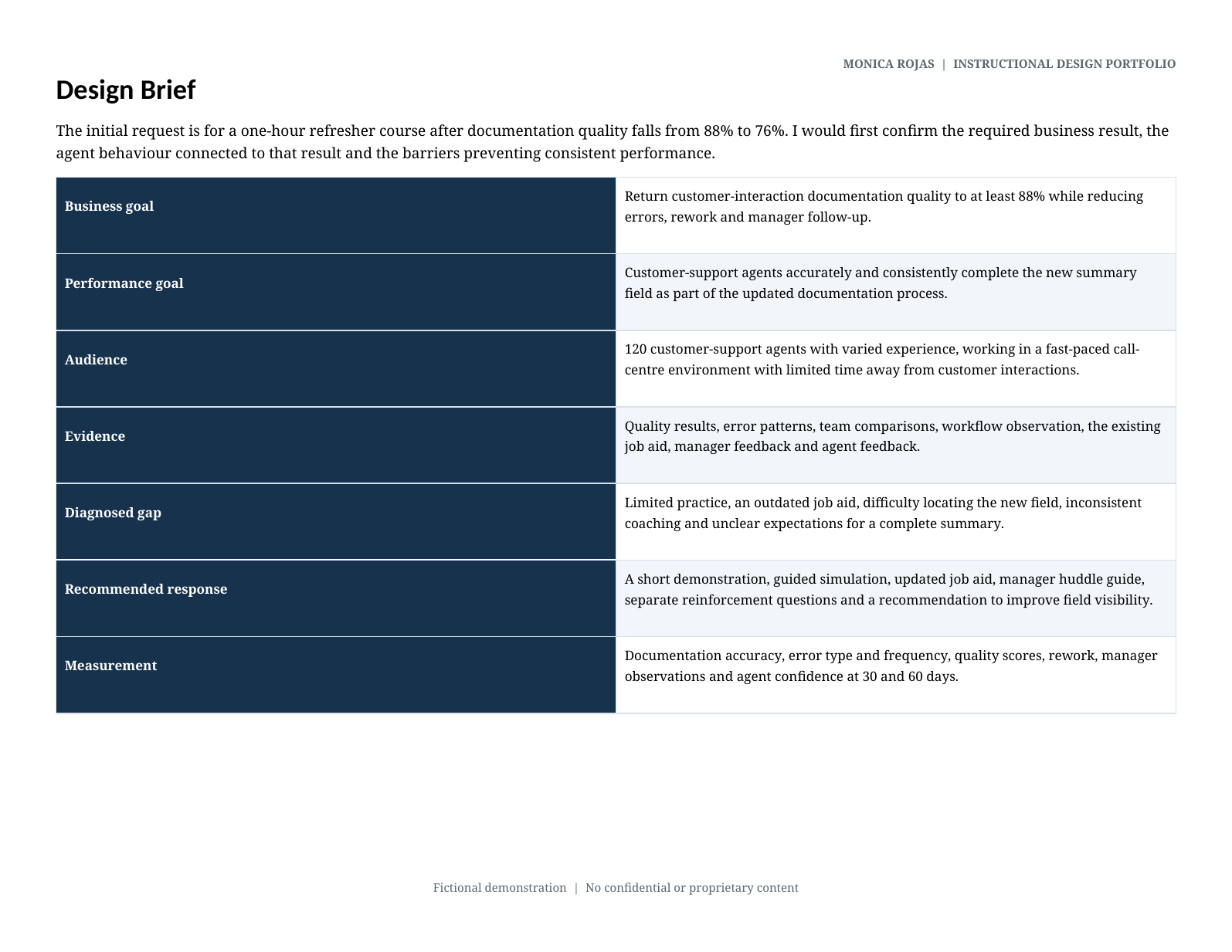
After a process change introduced a new Summary field, documentation quality fell from 88% to 76%.
Agents were expected to document the reason for each customer interaction, the action taken and any commitments or next steps. Errors in the new field were leading to incomplete records, rework, manager follow-up and potential inconsistencies in the customer experience.
The initial request was for a one-hour refresher course. Before recommending a solution, I would clarify what the business needed to accomplish and what agents needed to do differently.
I would review quality results, error patterns, team differences, the workflow, the existing job aid and feedback from agents and managers.
For this scenario, the analysis identified limited practice, difficulty locating the new field, an outdated job aid, inconsistent coaching and unclear expectations for a complete summary. Agents needed to see the process, practice it and receive support while applying it on the job.
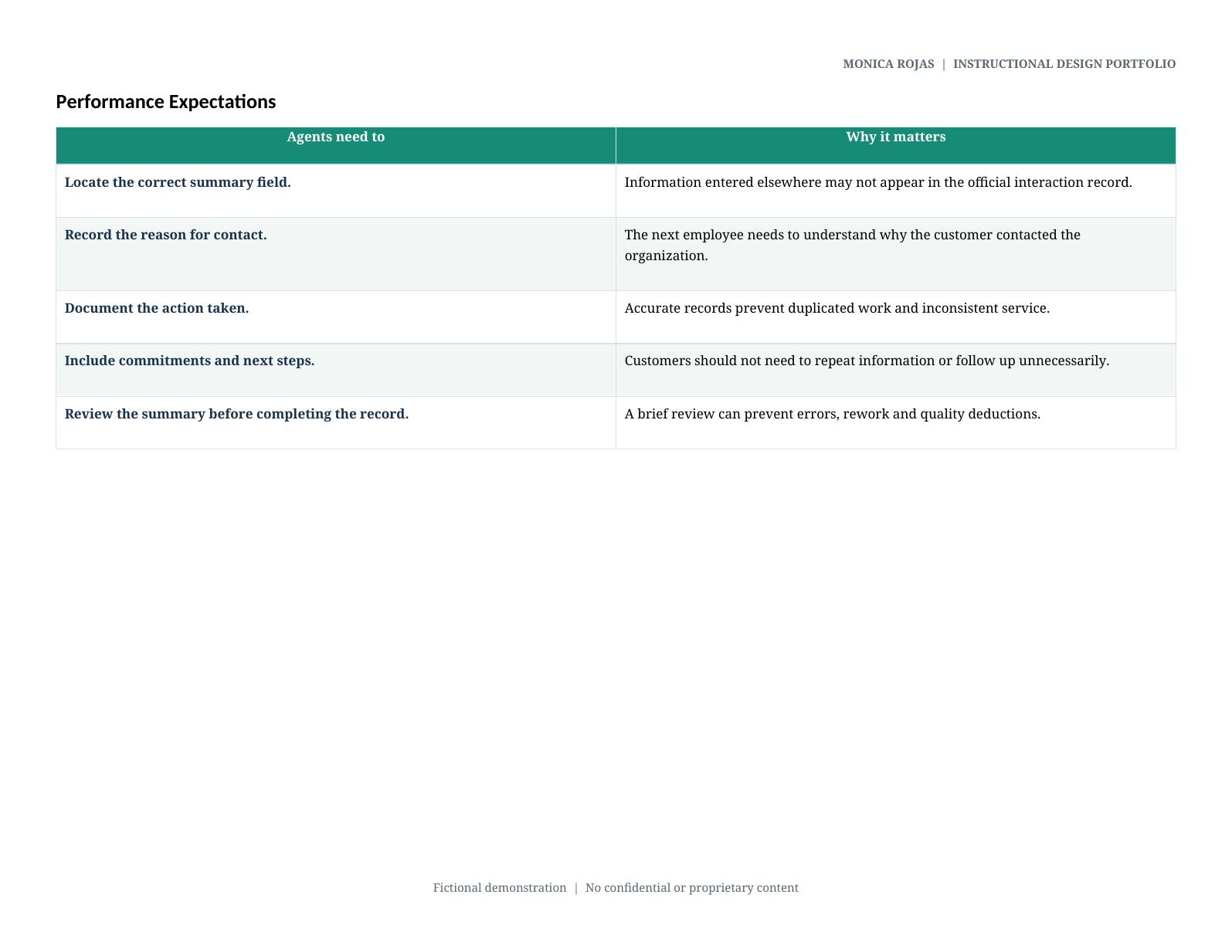
| Agents need to | Why it matters |
|---|---|
| Locate and use the correct Summary field. | Information entered elsewhere may not appear in the official customer record. |
| Record the reason for contact. | The next employee needs to understand why the customer reached out. |
| Document the action taken. | A clear record prevents duplicated work and inconsistent service. |
| Include commitments and next steps. | This reduces repeated questions and unnecessary follow-up. |
| Review the summary before completing the interaction. | A final review helps prevent errors, rework and quality deductions. |
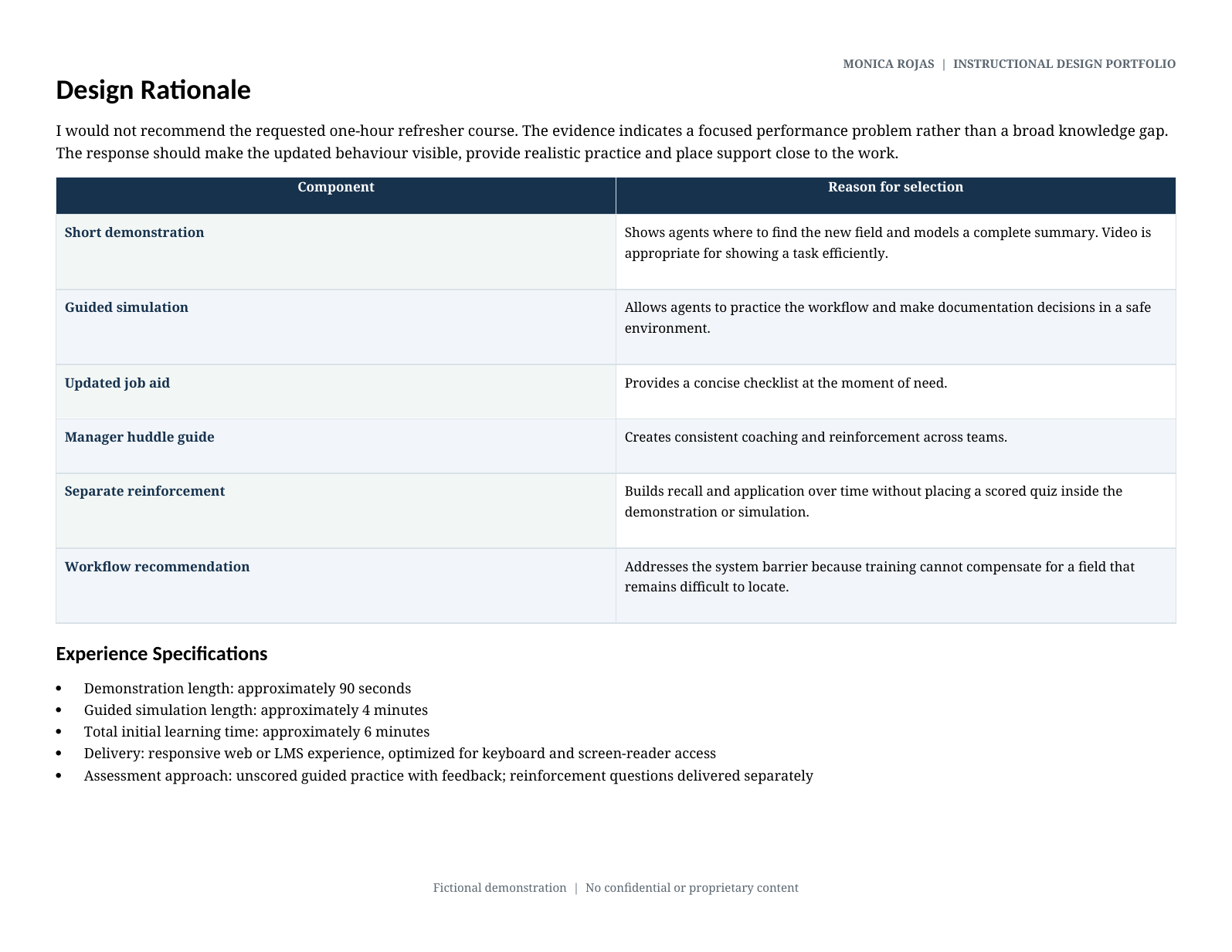
The response targets the behaviour and the barriers instead of expanding the training simply to fill an hour.
Shows where to find the field and models a complete, accurate entry.
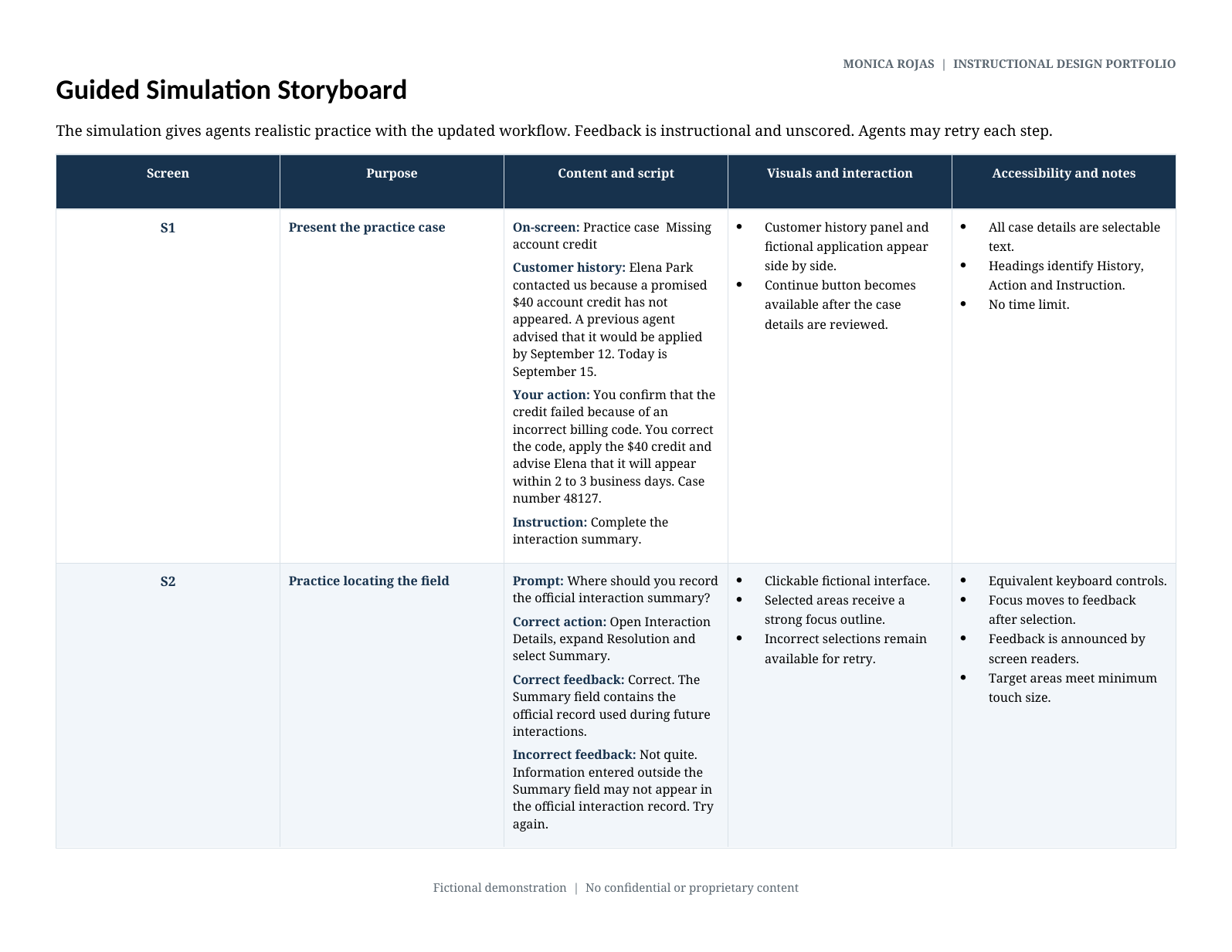
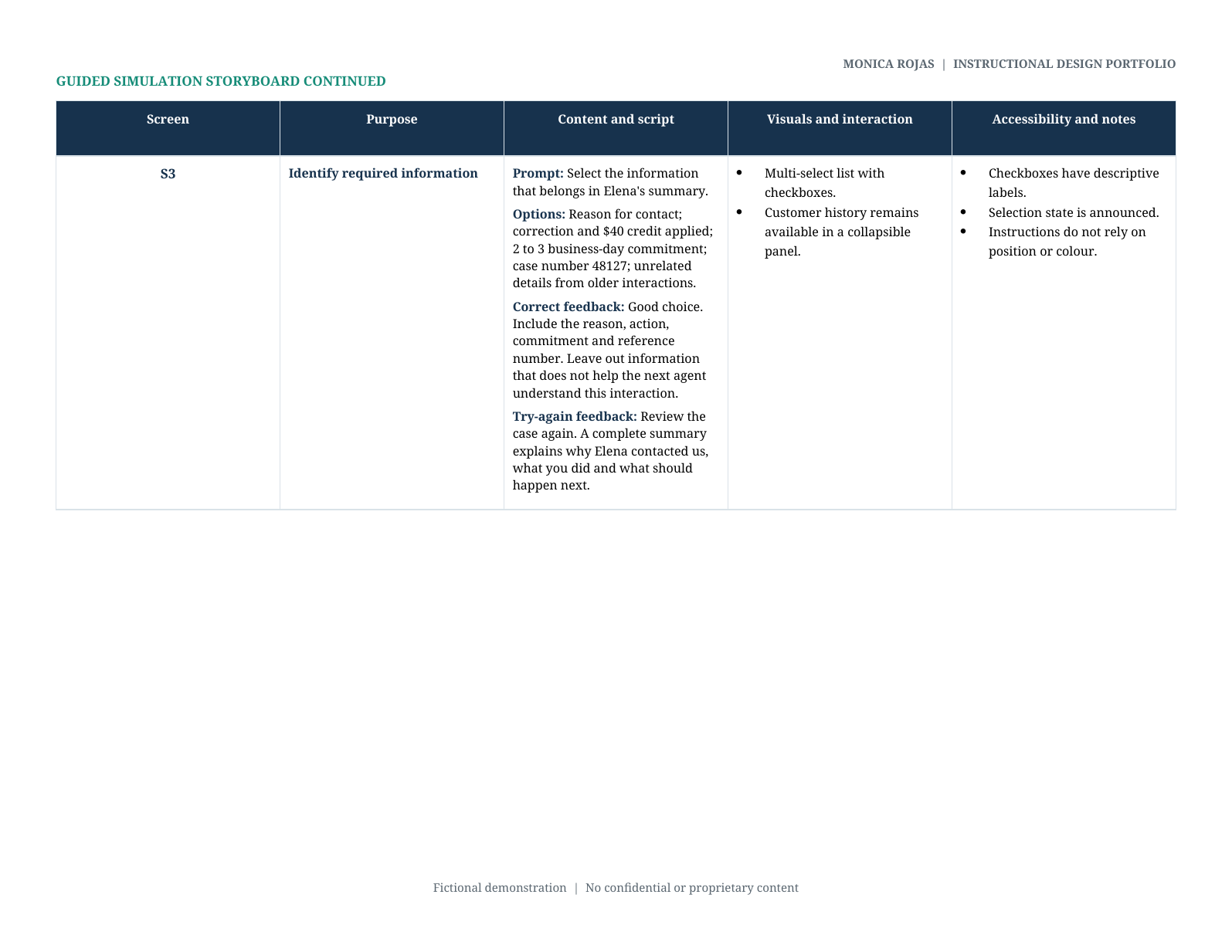
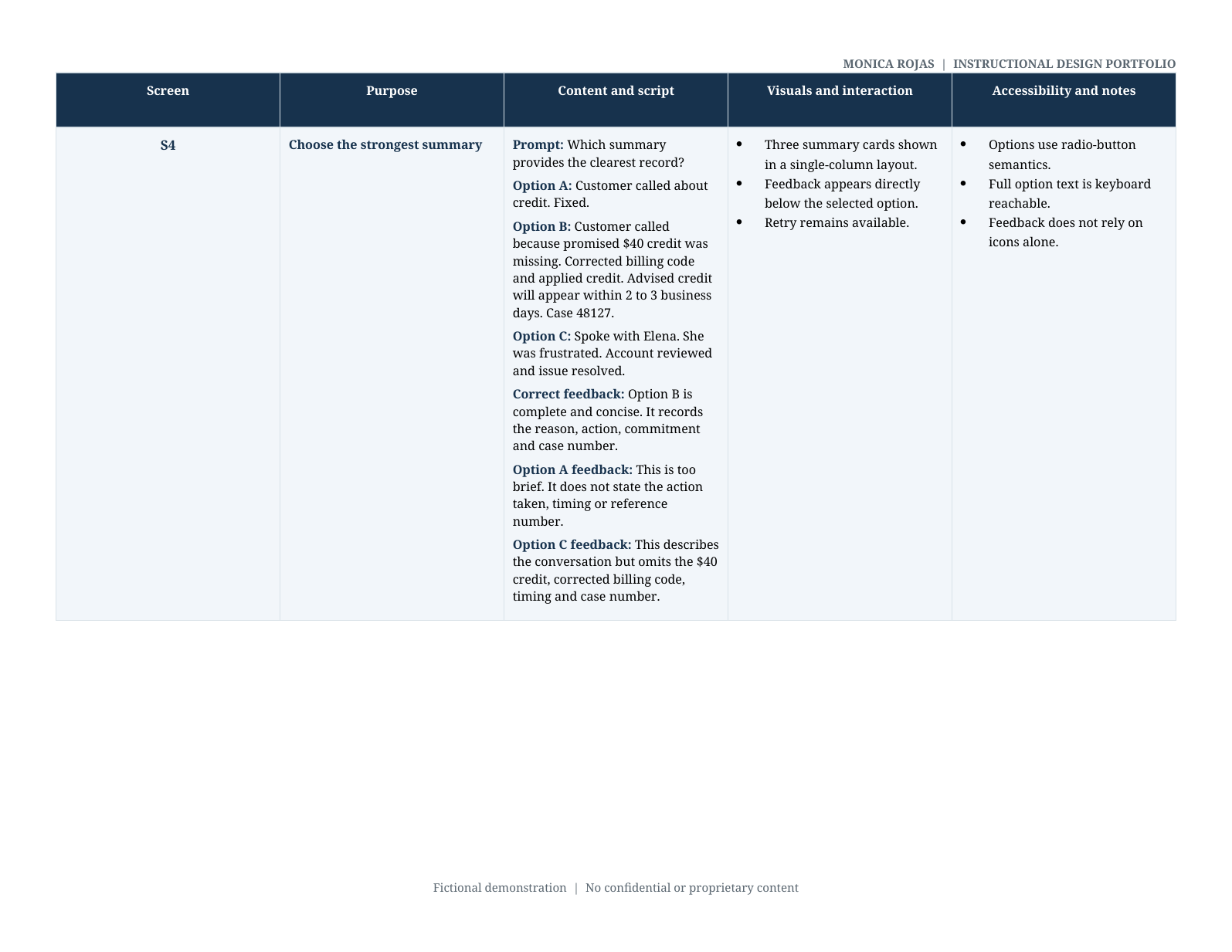
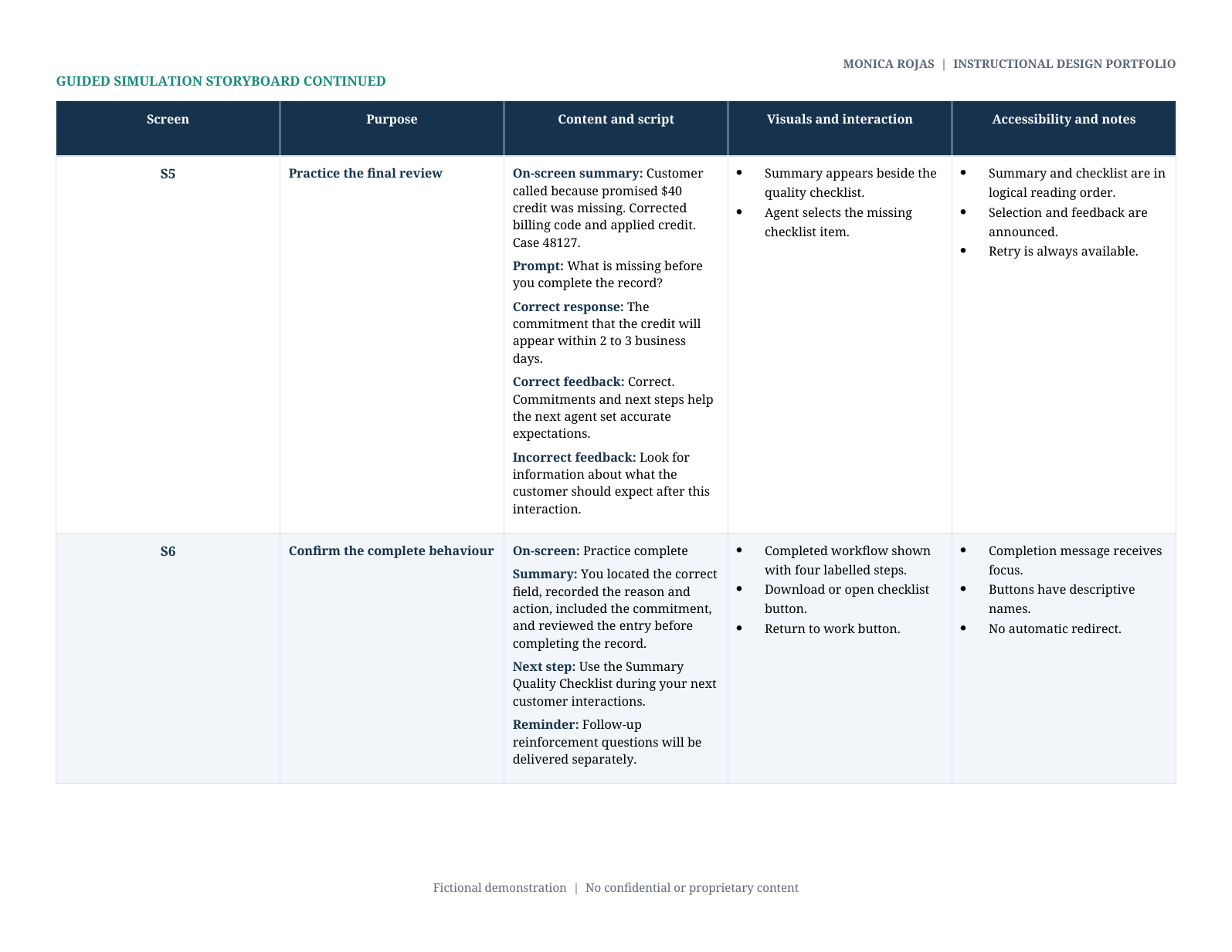
Provides realistic practice with immediate guidance in a safe environment.
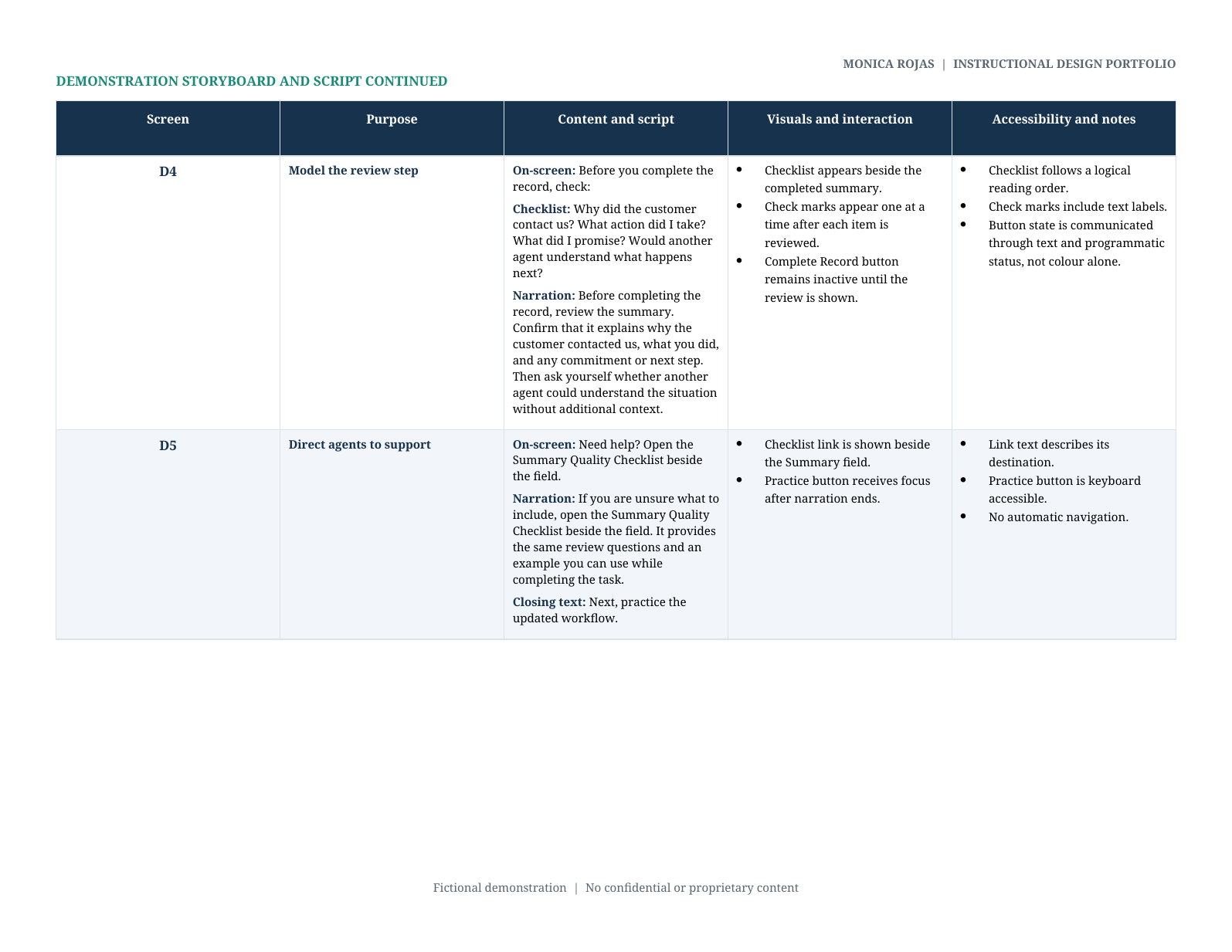
Provides a concise checklist during customer interactions.
Supports consistent reinforcement and coaching across teams.
Build recall and application after the initial experience.
Brings the field-visibility barrier back to Product or Operations rather than expecting training to compensate for it.
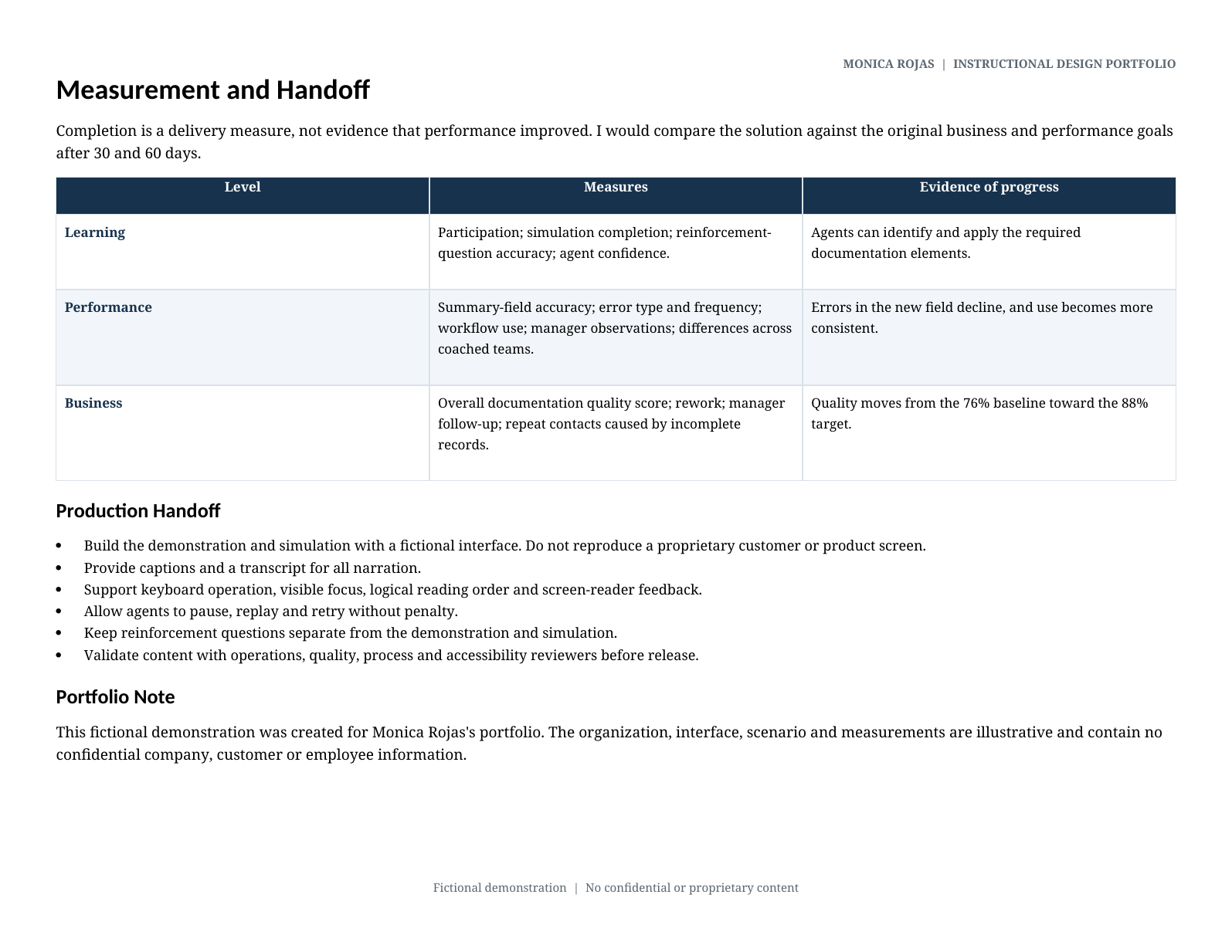
After 30 and 60 days, I would review participation, simulation completion, reinforcement accuracy and confidence alongside summary accuracy, error patterns, workflow use, manager observations, rework, repeat contacts and movement from 76% toward the 88% quality target.
The complete sample includes the design brief, performance analysis, solution rationale, scripts, interaction notes, accessibility considerations, reinforcement and measurement plan.
Use the scroll area to view all 12 pages. This web viewer does not include download or print controls.
This fictional sample was created to demonstrate my instructional design and performance-consulting approach. It does not include confidential company information, customer details, employee information or proprietary materials.
I would be happy to discuss the approach in greater detail.